|
|
GN 264 / WL 389-002 Fall 2010 Dr. Rasma Lazda |
|
TIME: TR 12:30 - 1:45 |
REQUIRED
TEXTS: One additional text
of your own choice. |
HU (Humanities) Designation:
Overall, this course addresses the ability to deal with questions of values, ethics, and aesthetics as they are represented in literature and related fields within the Humanities which will be the focus. This course emphasizes the history and appreciation of the Humanities, rather than simply the ability to perform tasks at the written level.
Course Description:
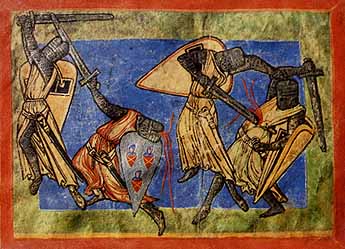
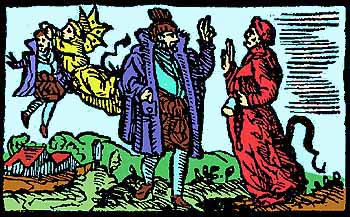
What do the Nibelungenlied (Song of the Nibelungs), the Historia of Doctor Johannes Faustus, and The Sorrows of Young Werther have in common? Not only are they part of world literature, but they also inspired countless later works of literature, visual art, music, and film. They reflect myths and address war, revenge, peace, honor, friendship, alchemy, and love.
Overall, this course addresses the ability to deal with questions of values, ethics and aesthetics as they are represented in literature and related fields within the Humanities.
The course emphasizes the history and appreciation of the Humanities, rather than simply the ability to perform tasks at the written level. Nevertheless,, the course includes substantial in-class and out-of-class writing that encourages the development of critical thinking and requires students to analyze, synthesize, and evaluate knowledge.
General and Specific Learning Outcomes:
Upon successful completion of the course, students will be able to:
*Recognize and identify key concepts particular to three masterpieces of German literature as part of the humaities
*Demonstrate effective written and oral communication skills
*Collaborate and perform effectively in group / team activities
*Recognize and identify characteristics of a medieval epic, a chapbook, and an epistolary novel.
*Recognize and discuss key concepts of the German High Middle Ages (between the 12th and 13th century), the early modern period as well as German Romanticism, more specifically the periods of Sturm and Drang and Weimar Classicism
*Understand the concepts of medievalism and reception
*Analyze modern adaptations of the three literary works in film, visual art, and music
*Understand the ideas of reception and reader response theory.Attendance / Make-Ups / Participation-Preparation:
Participation and preparation count as 10 % of your grade. Be prepared when you come to class. I will check from time to time your reading comprehension with small mini-quizzes.
You will have an initial 28 points in your participation/preparation account. For every session you come prepared you receive participation/ preparation credit for that class session. For every session you miss, I will deduct one point. You cannot earn preparation/participation credit if you have not prepared your homework or if you are absent. I will begin taking attendance the first Tuesday of classes.
Assignments listed on the syllabus are to be prepared for the day they are listed. Regular attendance is essential. THERE ARE NO MAKE-UPS for missed quizzes and other assignments. On rare occasions when absence is unavoidable due to serious illness or family emergency, I may require proof of your reason of absence before we discuss the possibility of make-up work.
Assessment:
You will have a variety of tasks to complete in this course: quizzes, tests, a PowerPoint presentation, one review (movie / art work / computer game), and three essays.
Tests
There will be three tests, including a midterm exam. The tests will consist of two parts: a first section will questions requiring short answers; the second section will be an essay question.
Power Point Presentation
You will prepare a Power Point presentation of about 15 minutes in length. You will choose a topic of interest that has to be approved by me. We will discuss possible topics in class. You will be evaluated on content, delivery, and the presentation overall.
If you have never done a Power Point presentation - do not panic! Here are some hints:
-You may not only read from the slides.
-Slides should be a backdrop for your presentation.
-Make use of photos, illustrations, maps etc. in your slides.
-Make sure that your presentation does not contain any spelling or grammatical errors.
-Rehearse your presentation.
-The content counts, not distracting sound effects, backgrounds etc. - keep it simple and clear.
Review
-You will write a review on an additional reading of your choice.
-Your choice of topic has to be approved by me.
-Your Power Point presentation and review cannot be on the same topic, unless so approved by me.
-You should count on a minimum of three pages for this assignment (double-spaced, MLA style).
-Your review has to be turned in via Turnitin.
-Please familiarize yourself how to write a review.
Essays
You will write two short essays on a topic I will assign in class. You should count on a minimum of three pages per essay.
All written assignments have to be double spaced and follow MLA Style (please follow this link to view a sample heading and a works cited page). Mark the total of your words at the end of your essays and your review. Please prepare your assignments on time and note that I will not accept any excuses for the lateness of your written work because of any kind of computer related problems. Written assignments have to be turned in via Turnitin before class.
Final
There will be a final covering the assigned material and the class presentations.Grading
Participation/Preparation
10%
Quizzes 10% 1 Power Point, 1 Review, 2 Essays
30%
Three Tests
30%
Final
20%
The grading scale used in this course is the standard +/- scale used by the University:
A+ 97-100 A 93-96 A- 90-92 B+ 87-89 B 83-86 B- 80-82 C+ 77-79 C 73-76 C- 70-72 D+ 67-69 D 63-66 D- 60-62 F 59 below
Honor Code:
Please keep the Code of Academic Conduct as stated in the undergraduate catalogue in mind for all the work for this class. Please follow the link to read the entire Code of Academic Conduct addressing cheating, plagiarism, fabrication and misrepresentation.
Disability Services:
It is university policy to provide, on a flexible and individualized basis, reasonable accommodations to students who have disabilities that may affect their ability to participate in course activities or to meet course requirements. Students with disabilities are encouraged to contact me in the beginning of the semester to discuss their individual needs for accommodations. It is standard university procedure that instructors require from students with learning disabilities a letter requesting accommodations in compliance with the Office of Disability Services (ODS). If you have a disability, register with ODS. Instructors are not obligated to provide academic adjustments until they have received an RFA letter ("Request for Accommodations" letter). To request disability accommodations, please contact the Office of Disability Services at 348-4285. After initial arrangements are made with that office, contact your professor. This information refers to all courses at the university.
DATES - check the syllabus for updates and links.
Please let me know if a link does not work.
Di = Dienstag = Tuesday; Do = Donnerstag = Thursday; 28.8. = 8/28
WOCHE 1
Essential Readings
More Do, 23. 8.
Nibelungenlied, Introduction
Germanic Migration;
Early Medieval Maps; Medieval European Geography QuizWOCHE 2
Di, 28. 8.
NL ch. 1-7; NL online Do, 30. 8.
NL ch. 8-14 WOCHE 3
Di, 4. 9.
NL ch. 15-19 Possible Topics for Power Point Do, 6.9.
NL ch. 20-24 Nibelungenlied exhibition (in German, but look at pictures) WOCHE 4
Di, 11. 9.
Nibelungenlied (comic, in German);
NL ch. 25-32
Do, 13. 9.
NL ch. 33-39
PPT Fritz Lang (Rachel K)
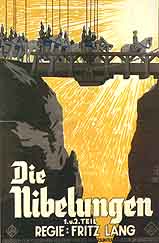
In German: Die Nibelungen
(play, German)WOCHE 5
Di, 18. 9.
Read: Fritz Lang, Die Nibelungen;
watch movie in class
BBC Interview with Lang (1967);
Fritz Lang, Master of Darkness;
The Lost Interview.
; Do, 20. 9.
watch movie in class;
WOCHE 6
Di, 25. 9.
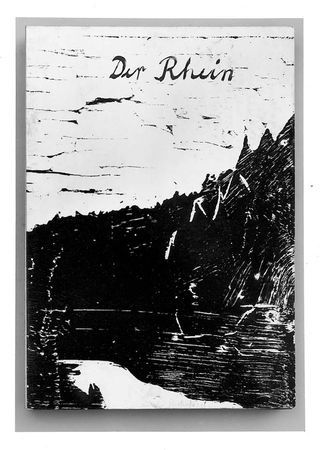
Anselm Kiefer - The Matter of History;
Anselm Kiefer;
Anselm Kiefer video interview;
Essay 1: Reading the Nibelungenlied; Please write about your experience in reading the Nibelungenlied. You can comment on whatever you like, your favorite character, why you liked to read it, what you did not like about is, what it reminded you of, but try to focus on ONE aspect.
Essay to be submitted via Turnitin.
PPT Dolchstoßlegende = Stab-in-the-Back Myth (Wolfgang)
Do, 27. 9.
Test 1 NL WOCHE 7
Di, 2. 10.
Introduction:
Historia von D. Johann Fausten
Faustus, ch.1 - 6
PPT Germanic Gods (Richard)
PPT Wagner, Der Ring des Nibelungen (Knowles)
Do, 4. 10.
Mid-semester break
WOCHE 8
Di, 9. 10.
Faustus, ch.7 - 15
History of the Faust Book;
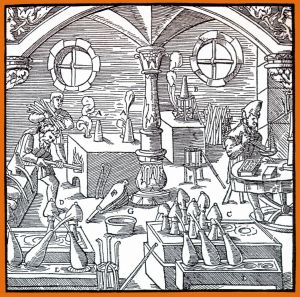
PPT Alchemy in the 16th Century (Emily)
Do, 11. 10.
Faustus, ch. 16 - 19
PPT Paracelsus (Jessica)
PPT Changing World Views in 15th and 16th Century Germany (Rachel S)
WOCHE 9
Di, 16. 10.
Faustus, ch. 20 - 25
PPT Marlowe's Doctor Faustus (Chris)
Do, 18. 10.
Faustus, ch. 26 - 30
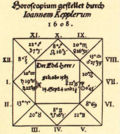
PPT Johannes Kepler (Wei)
PPT Mephisto (Reava)
WOCHE 10
Di, 23. 10.
Faustus, ch. 31 - 35
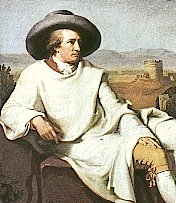
PPT Goethe's Faust (Bethany)
Do, 25. 10.
Faustus, ch. 36 - 42
PPT Faust in Opera (Abby)
right: horoscope by KeplerWOCHE 11
Di, 30. 10.
Faustus, ch. 41 - 44 (end)
Do, 1. 11.
Review for test:
The historical Faust;
Chapbook;
Worksheet Faustus;
Test 2 Historia of Doctor Johannes Faustus
WOCHE 12
Di, 6. 11.
Werther introduction 5-19;
Werther 25-45;
Werther online
PPT
Do, 8. 11.
Werther 45-86;
PPT The Nazis and Germanic Mythology (Christina and Parker)
Romanticism WOCHE 13
Di, 13. 11.
Werther 86-111;
PPT Tristan and Isolde (Megan)
Werther Hörbuch (mp3, in German)
Goethe-Haus
Do, 15. 11.
Werther 111- 134;
PPT Fashion at the Time of Goethe (Jordan)
Georg Lukács, On Werther (1936)
WOCHE 14
Di, 20.11. PPT Sturm and Drang (Stephanie)
PPT The Werther Effect (Alejandra)
Review due; submit via Turnitin
Sturm und Drang
(in German, easy);
Sturm und Drang
(in German, more challenging);
Sturm und Drang
(in German, challenging)Do, 22. 11. THANKSGIVING
WOCHE 15
Di, 27. 11.
Gould, M., Jamieson, P., & Romer, D. (2003). "Media contagion and suicide among the young" (American Behavioral Scientist) 46(9), 1269-1284) pdf;
Unrequited Love - Marlene Dietrich and Ernest Hemingway;
Essay 2: Is the deepest love always unfulfilled or tragic?
PPT The Romantic Hero (Bria)
The Sorrows of Young Goethe web site (receive letters from Werther) left: Marlene
Do, 29. 11.
Test 3 Werther WOCHE 16
Di, 4. 11. Hans-Georg Gadamer;
Reception theory;
Hermeneutics; Do, 6. 12.
REVIEW Di, 11. 12. FINAL DUE via Turnitin
Tuesday, 12/11, 2:00 pm
1. Open Turnitin,
2. Open Final Essay
3. View Special Instructions. You will find two topics.
4. Pick a topic.
5. Time yourself for 150 minutes to complete the essay.
6. Submit your essay via Turnitin AND via email, include your essay IN the message, not as an attachment.
Course Links:
Albert K. Wimmer, Anthology of Medieval German Literature
Nibelungenlied:
Text The Online Medieval and Classical Library (based on the edition NL, Daniel B. Shumway, transl., Houghton- Mifflin: New York, 1909).Text The Nibelungenlied, transl. by George Henry Needler (1904).
Introductory Sketch The Online Medieval and Classical Library
Historia of Doctor Johannes Faustus:
Text online;
The Sorrows of Young Werther:
Text online (transl. R.D. Boylan)
Back to Academic